Raising the Next Generation of Money Heroes
Where financial literacy empowers young people to make responsible and sustainable decisions
Project Dates
Start: 2023
The Story
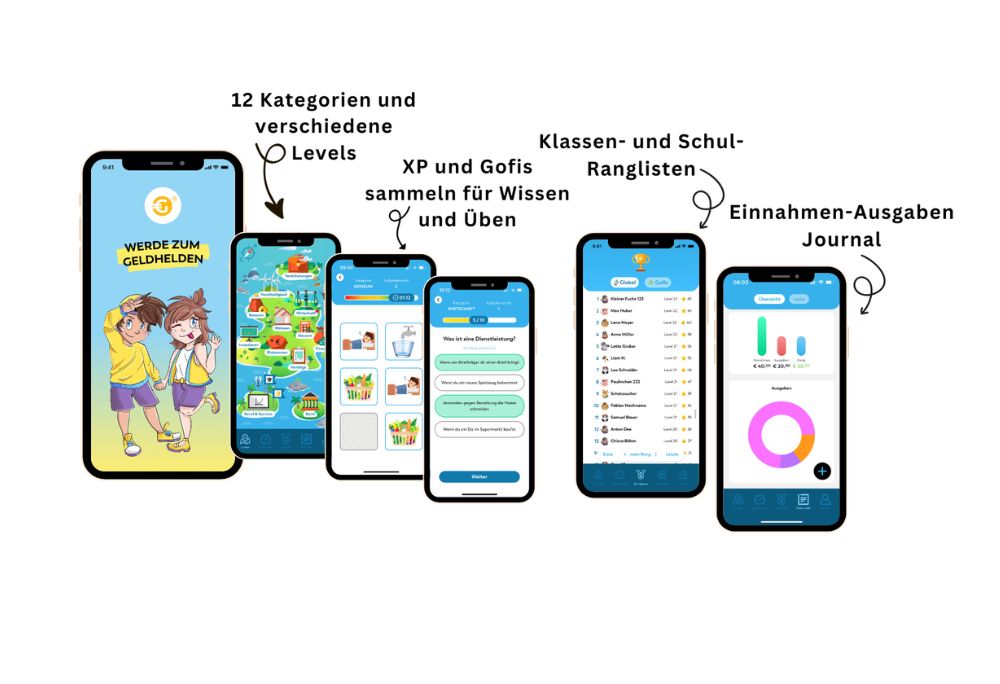
Young people make financial decisions early in life, yet practical financial and economic education is often missing. At the same time, everyday consumption choices have a direct impact on resources, production systems and the environment. The Money Heroes (Geldhelden in German) learning ecosystem addresses this gap by combining financial literacy, economic understanding and sustainable decision-making. Through interactive and gamified learning modules, young users explore questions that shape responsible decision-making: Do I really need this? Can I afford it responsibly? What happens when I no longer use it? By linking financial understanding with sustainable consumption, children learn that every purchase influences resources, society and the environment. Instead of focusing on restrictions, the approach strengthens awareness, critical thinking and long-term responsibility. Young people learn to question purchasing decisions, distinguish between needs and wants, and consider the life cycle of products. This awareness strengthens responsible consumption and fosters appreciation for resources and raw materials. By linking financial education with sustainability and everyday decision-making, the project empowers the next generation to understand the consequences of their actions and to shape their economic behaviour more consciously. In this way, financial literacy becomes a practical foundation for responsible, sustainable choices in daily life.
Success Factor | Hero Moment
A key moment of impact occurs when young people realize that many things they often buy are not actually needed. By reflecting on their consumption choices, they begin to save money and understand how it can work for them over time. This shift from impulsive consumption to conscious decision-making not only strengthens financial responsibility but also reduces unnecessary resource use and supports more sustainable behaviour.
Submitter
GOForIt GmbH




Hard Facts
9000 people are benefitting directly